Friday, July 17, 2015

How was it in Malawi?

That is the question. The question I receive every time I talk to someone I haven’t seen since before I went to Malawi early in 2014. The question to which people seem to know the answer better than me, even before I answer.

It's not that I don’t appreciate the question, actually. But it’s not an easy question to answer. It feels like my year in Malawi gave me more experiences than I have had during the rest of my life in sum. Some of them were of course good, and others were not so good. But, in order to not talk for hours on end each time I get that question, I normally simplify the answer to “Well, it was a very good experience for me, and I am very happy that I did it.”

Then, to my big surprise in the beginning, my friend in the commonest version of this conversation gives me the contrary: “Well, it wasn’t really that nice, was it?” – like if I would lie about it to conceal the fact that Malawi is a shitty country and that it was a mistake of me to go there for a year – “I have read your blog, Trygve, and you did complain a lot, didn’t you? It wasn’t so nice all the time, was it, really?”.  

It seems that my friends who read my blog tend to remember all the worst posts, while I have a selective memory which favours the good memories. That might be, but after a quantitative study of the 34 Malawi-related posts in my blog, 41% are mostly positive, 32% are mostly neutral and 26% are mostly negative. So I don’t think it was so bad, in the end. My theory is that the negative posts fit more in with the expectation people have of going to work a year in a serious job in one of the world’s most poor and under-developed countries. Or maybe it’s just shocking for Norwegians to read about things that go really wrong.

The other surprise I got when some friends tried convincing me that I went to Malawi due to an inspiration to help poor people and give of myself. That would be a very noble inspiration, but it’s not how I remember it. Actually, I claimed to my friends, I saw the job in Malawi as an opportunity to do something different and interesting, and to get to know a new culture and a new country. It was of course positive that I got to work with poor people’s access to solar energy, but I don’t think my only motivation for applying for the job ever was that I wanted to help the people in need. My friends refused to accept my complaint, and persisted that I had gone there because I was a great person that wanted to help the vulnerable and the poor. I’m happy to observe that my friends have such a nice conception of me, but I still don’t recognise myself in that role, even after considering it for a good while.

Sunday, May 17, 2015

May 17, 2014. Lilongwe, Malawi


One year ago I had a revelation: Celebration of May 17, the Norwegian Constitutional Day, is much more fun when you are not in Norway. To my surprise I discovered that they are much better at celebrating this day in Malawi than in Norway. Celebrating outside of Norway brings in a dimension that makes the regular hot dog taste better, not to speak of the vafler, lefse and smoked salmon.

After this day, I and my friend Sille have talked about it regularly because it was so great. For Sille the experience was so overwhelming that she wrote her last blogpost ever after this event and she has never since entered blogger.com. When we in November 2014 got a hold of the “documentary” that the Norwegian Embassy shot about the event, we laughed so much that it hurt for days after.


The "trailer" of the "documentary" prepared by the Norwegian Embassy.

This was somehow the start of a new life for us in Malawi – it was the start of having a network in Lilongwe and getting to know all the talented artists that have after come to Nkhotakota to help build the culturalactivities and inspire the youth.

As said, the usual things that you do in Norway become much more fun when in Malawi, as e.g.:
  • Raising the flag in the morning when its already 25 degrees C 
  • Walking in a parade with a music band composed by mostly Malawians who play Norwegian songs
  • Waving with the Norwegian flag when nobody really understand what it’s all about and they think you are going crazy
  • Eating Norwegian food
  • Playing typical Norwegian 17 May games with Malawians who have no idea but they are anyway much better than the Norwegians
  • Listening to the Norwegian hymn being song by a Malawian choir who does not at all speak Norwegian

But there were so many other aspects about this day that made it better than a normal Norwegian 17 May:
  • Nobody screamed “Hurra” for no apparent reason (well...almost nobody)
  • During the break between breakfast and dinner we went to buy solar panels and batteries in Area 2 all dressed up and with Norwegian flags waving from the vehicle
  • During that break we also went for a dip in the pool at Lilongwe Sunbird Hotel
  • The entertainment of the night was a 2-hour show at the Norwegian Ambassador’s residence, with a heap of politicians, diplomats and the cultural elite of Malawi present
  • It was interesting how different people dressed at the residence – Norwegians in student gala, black suits, bodyguard style, Idi Amin style, Baba Buntu style, Norwegian bunad, young hipster Indian guru style etc. 
  • After the official program we moved on to Lilongwe’s limited but vibrant nightlife, where we had our first jamsession experience at Chameleon and ended up in the shady bling bling disco Chez Ntemba Disco.


Friday, March 20, 2015

The pursuit of happiness and the perfect life

Now that I am back from 14 months in Malawi, I often ask myself what I have brought back. What is it that will stick with me, what will I always remember?

Nkhotakota, Malawi - one of the poorest regions of one of the poorest countries in the world, at least in monetary terms. But still – what does that really mean for happiness? Does that make them miserable and unhappy? I would say no.


Today, 20 March, is the United Nations International Day of Happiness. I think it is worthwhile for us contemplate a bit more about happiness. We in the western world are overloaded with propaganda every day which in one way or another try to convince us that consumption is the key to happiness. There are millions of different products and services out there that will please us and entertain us, make us better looking and more popular. In order to consume, you need to have money. The ultimate freedom to consume you get only if you are rich. That is maybe why most people somehow choose to pursue monetary wealth – as a way to get to this ultimate freedom to choose on how to consume and thereby attain happiness. But is it so? Does it make you happy? I would say no.

This is what 14 months in Malawi has taught me: 
There is absolutely no relation between happiness and monetary wealth.

Before going to Malawi, some of my colleagues and friends back home in Norway considered me to be a kind of hippie. Mostly because of my dreadlocks I suspect, if it wasn’t for them I would probably just have been perceived as another average guy. Before going to Malawi I would probably have exressed it something like “There is not a strong relation between happiness and wealth”, but now I am getting to “absolutely no relation”. Is it so? Not completely unrelated maybe, but happiness is much more strongly related to other factors. The United Nations International Day of Happiness has proposed the following guidelines to have a happy life, based on a literature review of scientific publications on the topic of happiness:


Let me try to analyze this in the context of my experiences from Norway and Malawi:

Factor
Average Norwegian answer


Score
Average Malawian answer


Score
Do things for others
I do things for myself so I can feel good. And nobody really needs my help anyway.
2
I mostly try to support my family and my community
5
Connect with people
Headphones on - leave me alone
2
Good morning! How are yooouuu!?!?
9
Take care of your body
I work out, I run Oslo Marathon, I do Birkebeineren on skis and bicycle, I do Zumba and crossfit
6
Walking to work, walking to get water, lots of manual work in the field – I keep active
6
Notice the world around you
No time for that - I'm busy
2
I have time, and not too much is happening anyway – so anything is interesting!
8
Keep learning new things
Plenty of opportunity for that in Norway
8
Limited opportunities for learning
2
Have goals to look forward to
Too many of them. Goals you said? No, they are deadlines
7
We focus on what's going on today, tomorrow is not so important - we are not there yet
3
Find ways to bounce back
No need to worry about that, that is the kommune’s responsibility
5
In Malawi you learn how to bounce back - sometimes you have to bounce back several times in one single day
7
Take a positive approach
Norwegians are more interested in criticizing than in being positive. An extremely good meal in Norway would be characterized as "not too bad" (ikke så verst)
2
If you can smile, then why don't you?
10
Be comfortable with who you are
Bombarded by propaganda about how you should be it is not easy and most Norwegians strive to be something they are not
2
Who else can I be, if not myself?
9
Be part of something bigger
What "something bigger" are you talking about?
1
I believe in God.
10
Average score
Norway
3.7
Malawi
6.9

Alas, we Norwegians are doomed to live in the unhappy pursuit of the perfect life. Malawians don’t really care, but they are happy anyway. And it has nothing to do with money. 

Friday, February 20, 2015

All the last times

I just finished my first last week in Malawi. It has been a lot of things to sort out in the office before I leave, but I've also enjoyed so much of the things I really love about Malawi - the good mood, the beautiful landscape, the random and crazy things, and hanging out with good friends.

Now I have arrived to South Africa for the homecoming workshop with FK Norway. Then I'll have another final last week in Malawi before I'm off to Florence.


Saturday - The last event at Nkhotakota Cultural Centre

Sunday - The last afternoon at Fish Eagle Bay and the last time to see Edson take chambo fish home to Lilongwe hanging from the side mirror of his hitchhike ride.

Monday - The last time to walk around Nkhotakota in the lunch break and discover totally random stuff.

Tuesday - The last time to bike home racing the local bicycle taxis, this one taking my housemate Cecilie on the passenger seat.

Wednesday - Last time to take a sunset Carlsberg (green) at Sungu Beach with my partners in crime, Sille and Thomas.

Thursday - Last time driving to Lilongwe with Sille, Robert, Andrew and Solace.

Friday - Last (and first) time to travel with Malawian Airlines from Lilongwe to Johannesburg

Also Friday - well back in the civilization, enjoying a cold beer in 7th Street in Melville, Joburg.

Monday, February 16, 2015

Random encounters

I'm biking through the villages on a Saturday afternoon, through these peaceful and innocent villages of Malawi. Where people have nothing, but still everything. Where people always smile. Where nothing is dangerous, nothing is unknown. Where time is just another thing passing by. Where nothing is wrong, where there is no shame. The kids run as freely and safely around as the chicken and the goats do. This is where everyone greets you, where you can always have a conversation, even without words. This is where people will treat you as you were their family even though they have never seen you before, even if you don't speak their language. Even if you are just passing through it will hit you; the curiosity, the friendlyness and the interest.

Is this what we lost with the invention of cities, the invention of roads, cars and escalators? The invention of high-rise buildings, the invention of TVs, cellphones, sunglasses and computers? The invention of property, borders, money, weapons, universities, hospitals, books and courts? What have we gained, and what have we lost? 

Tuesday, February 03, 2015

My little devil and my little angel


My little devil: Why are you still here? You've already had the "African experience", you know how it is now. You leave your wife, your old friends, your good job and your comfortable life behind, for this? Living in a country where everything is difficult? You have a stressful job with tons of responsibility, causing you sleepless nights and that leaves you with the feeling of not being able to deal with all the tasks? For what? For a ridicoulus salary, for living in a house where nothing really works well. If the worries from your job doesn't keep you awake, the bugs and the malaria-infested mosquitoes in your bedroom certainly will! With your small salary you even spend of your own pocket to make things run smoothly, both at home and at work? And what do your friends back in Norway get? Nice offices, well defined responsibilites...comfortable jobs and nice lives! And what if they have to travel from home and stay away from their families? Yes, they get tons of extra benefits, free travels, compensations.. They do not get their salaries reduced down to fraction of what they originally earn, do they!?! Go back! Don't stay here anymore. You have already done so much good here, why should you continue torturing yourself like this?


My little angel: Come on, this is an amazing experience! You should be grateful for this opportunity. You see so much, you learn, and you have so great friends here. And this little devil makes you complain about your salary? That's so selfish! You are so much better off than almost everybody here in Malawi. You are so lucky! You live in one of the best and most comfortable houses in the town, how can you complain? You have all the facilities you need, you cruise around in your air-conditioned car while everybody else has to walk under the scorching sun. You have such a great time with your friends, every weekend is just great, with the beach of Lake Malawi at your doorstep and all of this beautiful country to visit. And your job? It is marvellous! The experience you are getting is unique on so many levels, you learn so much, your colleagues are great. This is how you have always been wanting to work. Isn't it great to see all the results you have acheived? All the grateful faces? The people are dancing and singing in the honour of the things you have acheived! Hundreds of families have better lives now than before because of you, and you are helping the solar energy revolution to come to a new country and give a new, better and more sustainable lifestyle to the people who need it most. Isn't that the best motivation!?! Enjoy your last time here, you are so priviledged! Enjoy the country, the people and your job!

Me: It was not so easy to come back to Malawi this time. I've just came back after five weeks back in Europe and I have gotten used to that life. I'm only back for a short time though - I have less than four weeks left here in Malawi, and one week in South Africa. Now I have to concentrate to listen as much as possible to the little angel and make the best out of it, but I'm also looking much forward to come back to start up my life back in Europe again.

Sunday, January 18, 2015

2014 in review - Nkhotakota

Nkhotakota - sometimes known as the worlds largest village south of Sahara - is a quite lively place, a lot of things happen, but most of them go unnoticed anywhere else because of the lack of a news agency or coverage for the region. With this as a backdrop, you know that I have almost no official sources of information, and being an expat I don't even really understand what is going on most of the time. But these are minor challenges, I anyway think I will be able to wrap up the news of the year quite nicely.

Happy green new year 
The year 2014 started off nicely with plentiful and quite stable rain. Everything was nice and muddy, the grass was green, the trees were happy and the maize and rice was thriving in the fields. I arrived in January with my friend Sille, taking over for Eva and Thomas. For most people in Nkhotakota that didn't really matter, I guess they just thought that the white guys had changed their hairstyle.

Rice fields in Nkhotakota. 

Transport and road situation
With the rains came problems with the roads, especially on the stupid old bridge on the road between Salima and Nkhotakota. Most of the time it was closed and an substitute bridge was used instead, but to get to the substitute bride you sometimes had to drive through an incredible mudhole which was virtually impossible if you weren't travelling in a CV90 tank. That was good news for the local boys and young men, who worked as lifters to carry vehicles out of the mud every day and made a decent salary from that I guess. On days when the road between Nkhotakota and Salima was completely closed, the alternative was to drive through the Game Reserve towards Kasungu, on a mud road for about 40 km. In the start of 2014, work was being started to construct a new road on this stretch, but the funds were unfortunately withdrawn even before the work was really started up. As if this wasn't a challenging enough transport situation, the gas station in Nkhotakota has been out of diesel or petrol half of the time in 2014, so you had to be kind of lucky and smart to make your way out of Nkhotakota.

The last way to get to or from Nkhotakota is to take the "Ilala" ferry which travels up and down Lake Malawi dropping and picking passengers here and there. At the start of the year the saying was that the ferry wouldn't stop in Nkhotakota due to the destroyed dock (for which money is said to have been disbursed to repair at least two times, money disappeard each time). Later, it seemed the ferry was broken down, and it actually was. It came back in service, after more than six months in the dock, around October, but only for about two weeks before it broke down again. However, by the end of the year it seemed that it was running again and even stopping in Nkhotakota. I don't know if I would take it though...

Drugs, drugs, drugs
Even though the roads are not in the best conditions, they are the best way to transport large amounts of cannabis out of Nkhotakota. Nkhotakota is known in Malawi to be the home of cannabis and tons of the substance is shipped out from the plantations "hidden" in the Game Reserve every year. The police apprehended about one cannabis transporter every week - and we are not talking about backpackers with a few grams in their wallet - these are buses and cars loaded with the stuff - at one incident a minibus packed with more two tons was stopped.

A police officer from Nkhotakota with the catch of the day - 2 tonnes of cannabis! Photo courtesy: Nkhotakota Police/Facebook

In May, a couple of British guys were caught with close to one tonne of cannabis stuffed into a boat on a hanger behind their car. A bit suspicios? A nice and modern boat on a hanger - I've never seen that anywhere in Malawi. Anyway, they were brought to Nkhotakota prison, and from there they managed to make out a deal with a local guy to sell their boat for a ridicolously low price, which was anyway enough to cover the bail to get out from prison. They left, of course, but came back a few months later to pick up their car and buy the boat back (probably for a ridicolously high price compared to the ridicolously low sales price). It seems that this drug trafficking is good for local business - it brings money into the local economy and it keeps the police from getting too bored at the roadblocks.
A roadblock in Malawi, ehm, with a Carlsberg promotion for driving responsibly. Hmm... That brings us to the next topic... Photo courtesy: FK Family/Sille/Facebook


Road kills and accidents
Don't get me wrong, roads in Malawi aren't that bad, really. But the drivers are. And certainly the cars! So - effectively - traffic is quite dangerous in Nkhotakota. Even though the traffic is limited to a few hundred cars per day on the highways leading to Nkhotakota, there seems to be fatal accidents almost every week. Most of these might be related to drug abuse and alcohol - both from the drivers and the pedestrians. I have several times had to stop to complete halt from 100 kmph because of drunk people lying sleeping in the middle of the road or just wandering aimlessly around. But the cars are also a problem - cars in Malawi are old, repairing is expensive and it is difficult to get spare parts. In December, a truck from Yanu Yanu bakery in Nkhotakota apparently lost control on the roads down from Mzuzu. I don't remember exactly, but I think seven people were killed. And things like this happen quite frequently, surprisingly so considering the low density of cars and the little traffic that there is.

I've seen quite a few upside down cars in 2014. Many accidents are due to the bad state of the cars.

Disappearings
It seems that people disappear quite frequently in Malawi. I have during the year come to know about two disappearings in the near family of people that I know in Nkhotakota. Malawians claim that it is because bad people capture them to sell their internal organs to witch doctors. I am doubtful about that. I might be wrong, but I imagine that alcohol or drug abuse is involved in many of these situations. Maybe even traffic accidents can turn into disappearings if the driver is afraid to be discovered as the killer. Or falling into the river - getting eaten by a crocodile - or some people maybe just wander off to new adventures somewhere else in Malawi or Africa.

Culture on the rise in Nkhotakota
It has been a good year for culture in Nkhotakota. The Cultural Centre has strenghened its position and events have been organised regularly. The music school of the Centre that was started up in 2013 has increased it's activity in 2014 and now has two teachers and music classes every weekday. The cultural year culminated in the start of December with the first Nkhotakota Cultural and Music Festival, bringing local and national artists together on the stage in Nkhotakota. Also several new bars and restaurants have opened over the year - I think I should come back with a review of the Nkhotakota cuisine at a later point.
The Nkhotakota Culture and Music Festival 2014 - one of the highlights of the year in Nkhotakota! Photo courtesy: FK Family/Christine/Facebook

Another year has passed
It has been another year. Good or bad, hard to say. There is of course a lot of challenges and problems, but the people in Nkhotakota are happy and smiling most of the time. Lake Malawi was highlighted by Huffington Post as one of the Emerging Travel Hotspots of 2015. I hope that this will inspire more people to travel here and visit the large and, after all, wonderfully innocent village that Nkhotakota really is.

Local kids playing with the wind in front of the lakeshore in the centre of Nkhotakota. Emerging Travel Hotspot 2015! (I forgot to cover the elections in 2014 in Nkhotakota: Former president Joyce Banda came with a helicopter and gave out a lot of free stuff, as seen in the picutre here, but that old professor guy with the sunglasses won anyway.)


Thanks to: The Facebook page of Nkhotakota Police - the only written source of news from Nkhotakota as far as I know.

Sunday, December 14, 2014

The smiles

"Smiling is like breathing to us"
        - suggested explanation on why Malawians smile so much.

The big and frequent malawian smiles are to me a clear indication that happiness and material wealth are quite uncorrelated human forms of richness. I think about that now during the Christmas season while I see on Facebook that gifts are being purchased and wrapped to industrial scales back home - and I feel that all I really want for Christmas is to bring back with me the smiles of Malawi to my family and friends, and just keep smiling.


So these are some of the smiles of my year in Malawi. Real smiles, not "smile to the camera"-smiles. I think I have seen millions of them the last year, and of course the best smiles have never been captured on camera.

Sunday, November 30, 2014

Rediscovering the warm heart of Africa

A few weeks ago I was writing on a blogpost with the working title "The lost warm heart of Africa" - it was however never published and might or might not be published some time in the future.

This post is somehow related to the previous one about the bus ride, and think I have discovered that the best way of coping with a culture that is different than your own is to get as deeply into it as possible. Of course that takes some effort, goodwill and adventurousness, so it's not something you can manage in the lunchbreak between answering emails and setting up budgets. So I am happy to have had a bit of time the last two weekends to really get into it.

Today I woke up at 0600 all rested out (yeah, it's actually Sunday today), and decided it was time to get out into some villages. I chose to make my goal the Sani Hilltop in Nkhotakota, actually not a big hill, but the highest point within a reasonable distance, and I guessed there would be a nice view from there (yeah, I did not completely loose my Norwegian mindset yet).

I made it to Fish Eagle Bay, my chosen starting point and parking place. Immediately a local boy from the village beside volunteered to be my guide and we started off making our way through the villages, casava fields, pathways, burnt grass and rocks. Every hundred meters we met another person, of course with the usual ritual of "Muli bwandji. Ndili bwino kaya inu. Ndili bwino. Zikomo. Zikomo."* My guide, who was now already my friend by the way, was good in English and very interested in me, my country and not least my job with solar energy here in Nkhotakota. Making our way back down we had to stop several places in his village to discuss solar energy with his neighbors in Mbalame village, actually a place we are considering starting operations in with Kumudzi Kuwale. It seemed everyone knew about our company and I felt like a celebrity walking through the village. Everybody were super friendly and the only thing they asked me for except of solar energy was to take pictures of them. It's condidered an honour to be taken a picture of - and I'm sure they would be very proud if they knew that their pictures were to be published on the World Wide Web within a few hours.

When I was back in Fish Eagle Bay it was only 10:00AM, but I had already interacted and had conversations with probably close to a hundred people that morning. Where else is that possible?

Malawi - I guess after all your heart is still warm. I just have to get out of the mzungu lifestyle to discover it.

*Translation: "How are you? I am fine, and you? I am fine too. Thank you. Thank you." 


Tuesday, November 25, 2014

The time you need to take

Having a busy job, little free time and a car, I seldom get the chance to take in the real Malawi. Of course I live in it all the time, but a storm of thoughts and a wall of self reminders occupy my mind. I travel by car, and in weekends and holidays it takes me efficiently from one mzungu place to the next. I always thought that a car gives you the freedom to travel wherever you want and stop whenever you feel like it, but it might not be the best option always. Sometimes you'd better stop in the places you never even considered stopping.

This weekend I was coming home from my mzungu hangout in Nkhata Bay and for once I chose to take public transport. In spite of the slogan of the AXA bus service "punctual, reliable, friendly", the bus we were waiting for never came. So we ended up waiting four hours at the roadblock in Nkhata Bay, a place I would never have considered stopping if I were in my car. But so many others do, and it's a piece of Malawi I had never experienced. I liked it. And after four hours another bus came and we made it back to Nkhotakota safely.

Wednesday, November 05, 2014

The good and the bad

The most wise words about life in Malawi I think were pronounced by the young girl in this video which was recently made with youth from Nkhotakota: m.youtube.com/watch?v=ymXyWeDljEA

Life is so good, but sometimes it's so bad.

What I both hate and love about staying here is the emotional rollercoaster experience. You never know what to expect. A single day takes you up and down a million times.

Now, after a day of so many positive and negative experiences, I enjoy. I enjoy my beer, with my feet up, the warm stone heating my ancles and the moon rising over Lake Malawi.

Tuesday, October 28, 2014

Two eventful days in Ethiopia

Last weekend I was in Ethiopia. I had two eventful days with my friends Ellen and Øystein who live there since two and a half years and have even had a kid during that time.

Ethiopia is a very interesting country and has a different mindset than most other countries I've been to. They are extremely proud of their country and their cultural heritage, to an extent that I have only seen in one other country I've visited so far - the other one is Peru. I got to see some of the Ethiopian culture and music in a show that was set up in the complex of Alliance Francaise - a fusion show with experimental jazz and punk mixed up in a jam session with traditional Ethiopian music and dance. The dutch band The Ex was the core of the event - really cool.

The second day we set out with a group of British people on a picnic and hike. We drove out of Addis Ababa, and after about one hour we reached the edge of a deep escarpment with a waterfall. A magnificent view. Some local Ethiopians were there, and followed us arround seeming to be interested in what these mzungus were up to in their village. We even saw the gelada baboons, the only monkey that live strictly from eating grass and live in groups of up to several hundred individuals. The local villagers were very interested and wanted to practice their english. I am used to this from Malawi, and went along with my friendly tone in a conversation with a couple of the youg girls. Walking back to the car, the girls started asking for money. I am also used to that, and of course I never give money to anyone in exchange for a conversation. When approaching the cars, the crowd accumulating around us were becoming bigger and bigger. I am used to this from Malawi also, but when we had sat down in the cars and wanted to drive out of there the situation became tense. The locals demanded money and started banging on the windows of the cars. Some of them picked up stones and rocks, threatening to throw them against the cars. We managed to get out of the chaos, but it was not a nice experience. My friends later told me that this is what Ethiopians do in the rural areas - they threaten you and throw stones after you. Not a very good strategy to attract tourism to a country which has so much to offer.

We stopped in a more quiet place for a picnic. Also this time a few locals spotted us and a club of young sheperds decided to take a break in their herding and stood and watched us while eating. These guys were more peaceful, and honestly interested in seeing what strange food these whites had brought to eat here among their cows and teff fields. It felt a bit weird eating with such a public, but no signs of throwing stones this time.

After the picnic a few of us went out for a bit of hiking. Rolling and lush hills and with the deep escarpment on the side - a beautiful landscape. Being just north of equator the rainy season has just ended in Ethiopia now in October, and the landscape is green and sprinkled with flowers of different colors. The dark and fertile soil is an excellent foundation for different crops. Ethiopia has a lot of endemic crops - species that were cultivated for agriculture there and due to the special climate some of them are still almost only found in Ethiopia. Fortunately one of them have caught on in many other places in the world, and every time we enjoy a cup of coffee we can thank Ethiopian farmers from thousands of years back for cultivating the bush that gives us this wonderful drink.

Thursday, October 16, 2014

Italy as seen from the eyes of a turist from Malawi

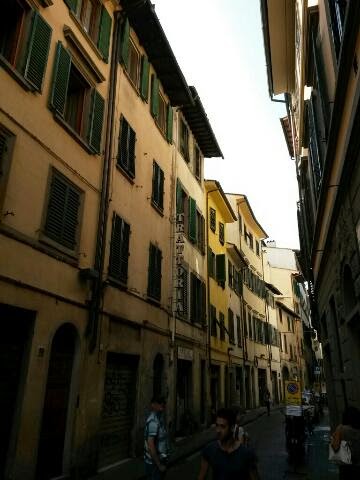
I have taken a week off from work in Malawi to go and visit my wife in Florence, Italy.

Before going to Italy I was dreaming about how it would be: Wine, tons of tasty food, architecture, art... I have been here before, but sitting on the very basic countryside in Malawi imagining Italy became like a dream to me. How had they managed to build all those cathedrals? The cities, the roads, the railroads, the museums? From Nkhotakota it seemed amazing, like the result of a miracle. I thought I would do nothing more than stare with wide eyes and an open mouth for the ten days in Italy.

Now that I'm here I know that there was no shock in the end. I never caught myself with my mouth open and I quickly adapted my regular ignorant manner of strolling by amazing buildings and cathedrals without even lifting my eyebrows. But I anyway appreciate the perspective that my dreams of Italy seen from Malawi had given me.

Monday, September 15, 2014

Solar energy companies from Malawi excel in SEED Africa Awards

Three social enterprises working within rural energy supply received international recognition at the SEED Africa Awards symposium in Nairobi, Kenya on September 10, 2014. The three companies are Kumudzi Kuwale from Nkhotakota, and Electricity4All and Powered by Nature based in Blantyre. Honey Products Industries from Lilongwe also received an award for empowering honey-producing farmers. The SEED Initiative, initiated by the UN Environmental Programme, identifies and supports promising small scale social and environmental entrepreneurs who work towards a greener economy and tackle poverty, marginalization and social exclusion.


The representatives of the solar energy enterprises in Malawi that won SEED Awards, from left: Deus Byson, Martina Kunert and Trygve Mongstad 

“It is clear that the unique energy situation in Malawi spurs substantial innovation within the energy sector”, explains Martina Kunert from Powered by Nature. “When around 90% of the population still lack access to electric power there is a great potential and a need for enterprises like the ones we represent.” Kunert is also the Board Chair of the NGO Renew’N’Able Malawi which is helping to  coordinate civil society and private sector actors under the UN Sustainable Energy 4 All campaign. “We hope that these awards will help us progress, and expect the governmental bodies to provide their support in further development of the renewable energy sector in Malawi,” she adds. Solar energy solutions and energy efficient cookstoves may provide a stepping stone to increased standard of living, enhancing health, education and economy for rural Malawian families. “Our technologies can also contribute greatly to reduced pressure on Malawi’s highly depleted forests and forex expenditure on paraffin, as well as better agriculture efficiency”, Kunert mentions.

All three companies are, independently, working to promote and sell solar energy solutions and clean cookstoves, and emphasize on access to clean lighting and charging for all as their goal. One of the technical solutions under exploration by the enterprises is the construction and operation of battery charging stations in rural villages. The villagers, rather than buying a complete system, only purchase or rent a few LED lamps. To power the lamps, batteries are rented and returned to the charging station. “When the villagers don’t need to undertake the cost for the batteries and the solar panels, the investment is within reach for most people, even in remote villages. We charge about K5,000 for connection of a couple of lamps and later the customer pay about K300 weekly for charging the batteries”, explains Trygve Mongstad, the Norwegian general manager of Kumudzi Kuwale. “The villagers are extremely grateful for our program, and we hope we can show that after our pilot phase we can operate the stations with a profit”.  

“We are bringing in quality, affordability and after-sale support, which has been lacking in most of the energy products that Malawians have been buying up to now” states Deus Byson from Electricity4All. They focus on developing the solution of battery charging stations further, in what they call Energy Kiosks. The company already operates four Energy Kiosks in the Mulanje and Thyolo districts, with plans underway to distribute solar home systems to all over the country.

There is also an increasing demand for offgrid power solutions for business, industry and agriculture in Malawi, as this example of a solar-powered water pump installed in July 2014 by Kumudzi Kuwale.

In general there is a great interest for solar energy services in Malawi. “Our solar expertise is also wanted by many businesses in the region, and we see an increasing demand for off-grid electricity solutions,” states Mongstad. The three awarded entrepreneurs, who together believe in a bright future for solar energy in our country, are grateful to bring the SEED Africa Award home to Malawi. They appreciate the support to the Malawian winners by the government of Flanders, Belgium.

Thursday, September 11, 2014

Hell yeah, we have won an award!

I think I have reason to be a little bit proud today - the company that I am working with (and, to some extent, I have created) has won the "SEED Africa Award" for being a very promising enterprise in social and sustainable entrepeneurship in Africa. The price is a lot of fame, consultancy in further developing the business plan and five thousand dollars to develop the company further.

That said, even without the award I am very proud of Kumudzi Kuwale. Since I came here in January, the company has grown from one part-time to now twelve employees. And most importantly: Good employees! Some have the impression that Malawians are lazy and not very well educated, but these guys are a really hard-working crew. Not to speak about the things we work with. I can see it in the eyes of my colleagues - they can feel that they are doing something important, coming to work every day with a smile even after knocking off late the day before. Something is happening in our small office - I think I can say that we are changing Malawi - at least we are starting. People are starting to notice Kumudzi Kuwale, and I can hear people passing by the office exclaim "Kumudzi Kuwale, eeee", assertively acknowledging that here is something that is finally helping Nkhotakota to come forward.

Winning an award now is the result of a few years of work, in an FK Norway-sponsored project, with contributions from the Norwegian FK participants and a lot of effort from the staff of Nkhotakota Youth Organisation to map out the energy needs in off-grid villages and later starting up the company which is now Kumudzi Kuwale Limited. Since I came, we have also been so lucky that we have capital to start developing models for electrification of villages in Nkhotakota, granted by The Royal Norwegian Embassy of Malawi. Thanks to all of you, and I hope that we will show us worthy of this award in the future - bringing power, empowerment and employment to the people in Nkhotakota and soon the rest of Malawi.

Me and some of my colleagues from Kumudzi Kuwale in our office. A great crew, worthy of an award!


Sunday, August 31, 2014

Map of Kumudzi Kuwale's projects in Malawi

I've compiled a map to show the projects that we have been working on so far with solar energy and efficient cookstoves in the Nkhotakota region in Malawi. It's not a bad track record for a one-year old company! However, I beleive that the map will fill up even more within the coming year.


Thursday, August 28, 2014

The lake flies of Lake Malawi

One of the craziest things of this crazy country is the lake flies. The first time you see them, you think it is the smoke coming from the chimney of a big ferry. Then you realise there are no big ferries in the lake. It must be smoke from some big fires in Mozambique? No, the black clouds rising from the lake are actually flies. Millions of millions of flies, rising to the sky in a celebration of life and reproduction. They have lived as larvae deep in the lake their whole life, which is about to culminate in a day or two of swarming before they drop dead to the ground. The phenomenon can be seen from June and a few months time every year, almost every day.

Fascinating from a distance, but some times the swarms will drift in over land. The flies will be everywhere, they fill your eyes, mouth, nose, ears... And they smell. Strong smell of fish, I've never even thought insects could have an odour.

Fortunately, Malawians have found a use for the flies. People will run around with plastic bags, mosquito nets or whatever can be used to accumulate the flies, or even sweeping them up as they are found dead on the ground. The flies are then used to make a sort of buns, I'm not quite sure how they are prepared, but after a fly invasion the black fly buns will be seen on the market.